
Off-Campus Housing
Essential Tips
The San Diego rental market moves quickly. We recommend starting your search at least 3 months before your intended move-in date. Protect yourself by staying alert to these common signs of a scam:
- Never send money via Zelle, Venmo, or wire transfer before seeing a property and signing a lease.
- If a unit is listed significantly below market rate, it is likely a scam.
- Be wary of owners who claim they cannot show the unit because they are currently abroad.
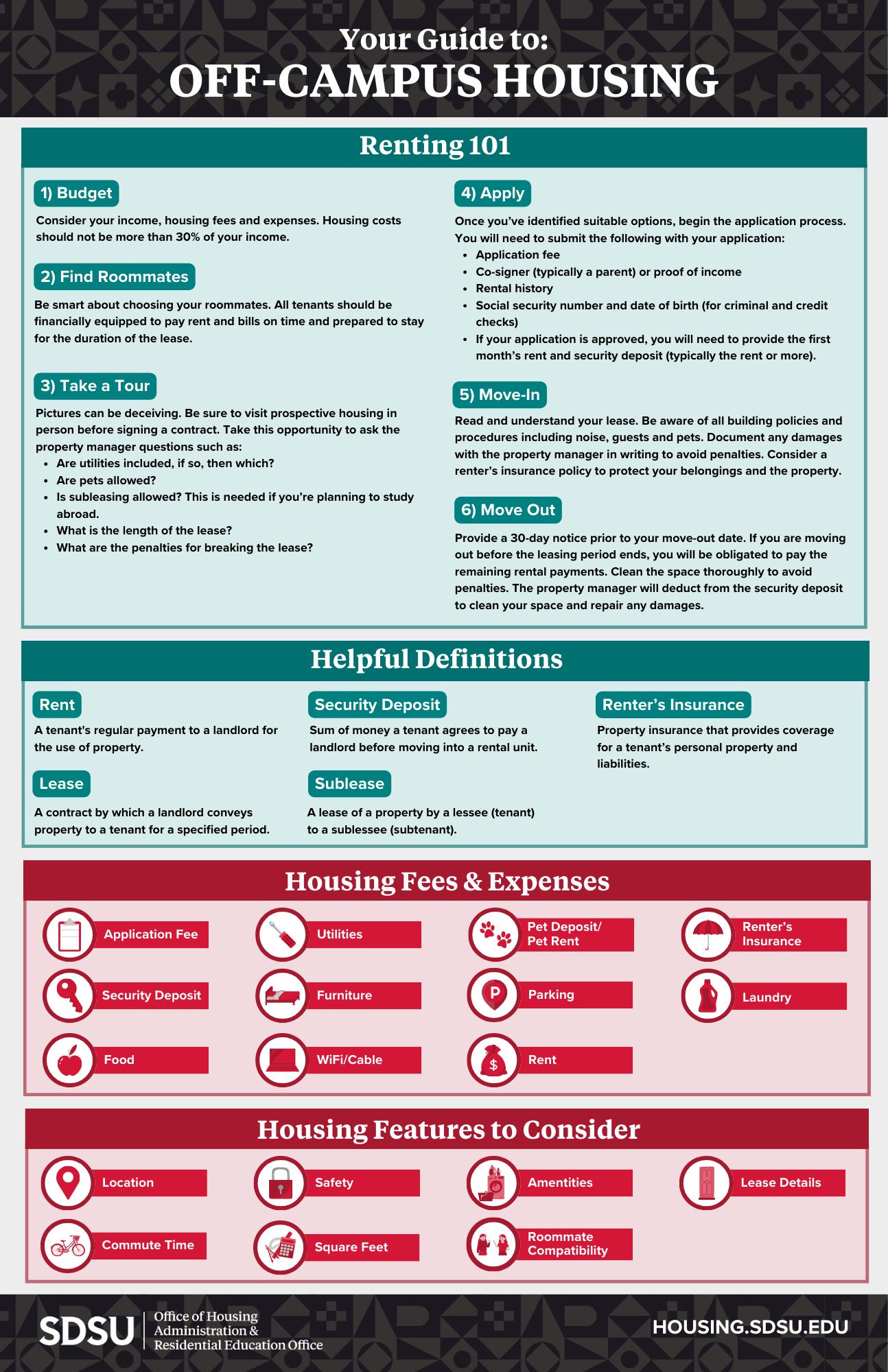
When comparing costs, remember that rent is just the base price. Be sure to factor in these additional costs:
- Furniture: Most rentals are unfurnished.
- Utilities: Budget for electricity, gas, water and trash.
- Wi-Fi
- Laundry
- Parking
- Renters insurance: Highly recommended to protect your belongings and the property.
- Food
Be smart about choosing your roommates. All tenants should be financially equipped to pay rent and bills on time and prepared to stay for the duration of the lease. Draft a shared living agreement to decide on quiet hours, cleaning schedules and guest policies before you move in.
Pictures can be deceiving. Visit prospective housing in person before signing a contract. Take this opportunity to ask the property manager questions, such as:
- Are utilities included? If so, then which?
- Are pets allowed?
- Is subleasing allowed? This is needed if you’re planning to study abroad.
- What is the length of the lease?
- Who is responsible for the lease if a roommate leaves?
- What are the penalties for breaking the lease?
Once you’ve identified suitable options, begin the application process. You will need to submit the following with your application:
- Application Fee: Used for background/credit checks
- Co-Signer: Students may require a parent or guardian to guarantee the lease
- Rental History: References from previous landlords (if applicable)
- If your application is approved, you will need to provide the first month’s rent and security deposit (typically the monthly rent amount)
- Read and understand your lease. Prior to signing, be aware of all building policies and procedures, including noise, guests and pets.
- Upon move-in, take photos and videos of the entire unit. Document any damages with the property manager in writing to avoid any damage charges that you did not make.
- Enroll in a renters' insurance policy to protect your belongings and the property.
Provide a 30-day notice prior to your move-out date. If you are moving out before the leasing period ends, you will be obligated to pay the remaining rental payments.
- Request an inspection two weeks before you leave. This gives you a chance to fix minor issues so the landlord doesn't deduct from your security deposit.
- Clean the space thoroughly. Under California law, landlords cannot charge for normal wear and tear, but they can charge for cleaning and damages.
Guide to Off-Campus Housing
Resources
- Transitions Meetings: Second-year students currently living on campus are encouraged to attend the Residential Education Office’s meeting series titled "Transitions." This program focuses on the transition to off-campus housing by covering financial literacy, lease agreements, city ordinances, tenant rights and good neighbor best practices.
- Economic Crisis Response: Students experiencing immediate food, housing or unforeseen financial crises that impact student success are encouraged to visit SDSU's Economic Crisis Response Team (ECRT) page, where they can complete a Request for Assistance and find additional resources.
- Legal: Students are encouraged to review the California Tenants Guide (PDF) to ensure a full understanding of legal rights and responsibilities as a tenant.
Affiliated Off-Campus Communities
- M@College
- Sanctuary Suites (Grad Housing)
Non-Affiliated Off-Campus Communities
San Diego State University is not affiliated with, does not endorse and does not guarantee the accuracy or safety of the listings on third-party websites. The websites listed below are provided for informational purposes only. Students are responsible for conducting their own due diligence before signing any agreements or making payments.